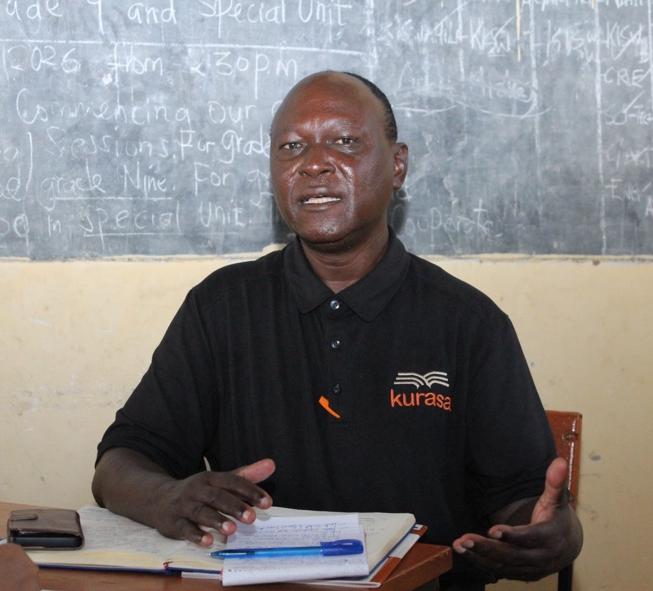
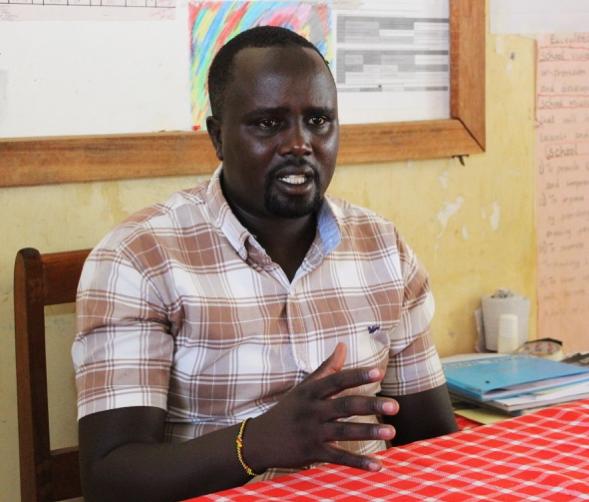
Teacher Zakaria in class busy teaching using a braille machine.
In the heart of Dagahaley camp, at the Juba Comprehensive School, a story of resilience and transformative teaching unfolds daily in the Visually Impaired Unit. Here we meet Zakaria Abdullahi, a teacher who has been living with visual disability, but has still managed to dedicate over 10 years to educating learners with similar challenges. His unwavering belief that “Disability is not inability” continues to inspire both learners and colleagues.
Zakaria’s journey into teaching was shaped by his own experience as a student under a visually impaired teacher, whom he credits as having moulded him into the teacher he is today. And today, he carries forward that legacy, determined to empower his learners to also become active contributors to their community as teachers, doctors, lawyers, leaders, name it.
“Education changes everything,” he says. “I want my learners to be useful members of society in future.”
For years, he taught with minimal resources which included few braille machines and a single talking calculator shared among all learners. This limited access to learning materials slowed down lessons and made learning less effective. Despite these challenges, Zakaria remained committed and kept on adapting his teaching methods to ensure no learner was left behind.
A significant breakthrough however came with the intervention of the TeachWell project, which provided a range of assistive learning devices including Perkins braille machines, orbit readers, speech articulators, and talking calculators. These tools, according to the teacher, have revolutionized the learning environment, making lessons more interactive and accessible.

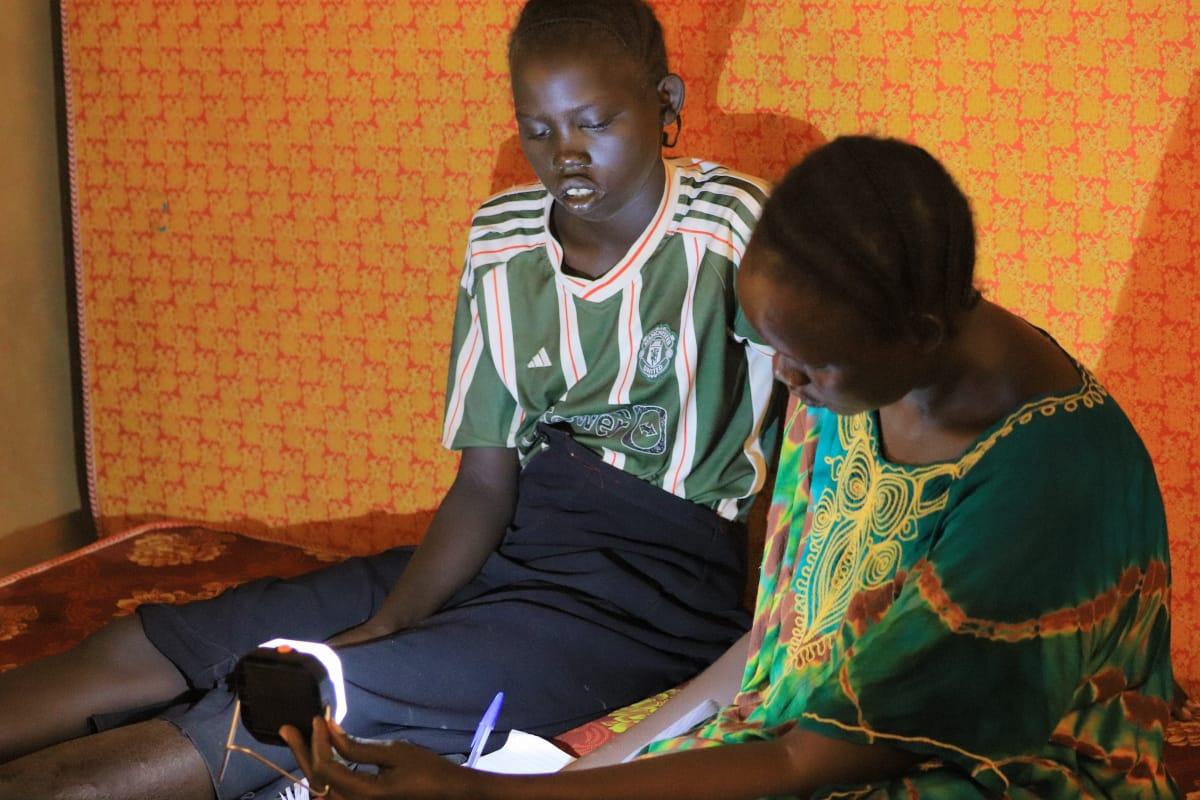
Zakaria in a Math lesson teaching using Talking calculator to facilitate learning
“With the new learning materials, learning has become more interactive and fun,” Zakaria shared. “My learners have actually registered improved attendance to school as compared to the beginning of the year.”
And the impact has been profound. Learners now engage more confidently with learning content, and the classroom atmosphere has shifted from one of limitations to one of possibility. The learners cannot wait to see what the future holds for them beyond the classroom. Juba school community is deeply grateful for the support, recognizing that inclusive education is not just about access but also about dignity, empowerment and opportunity.