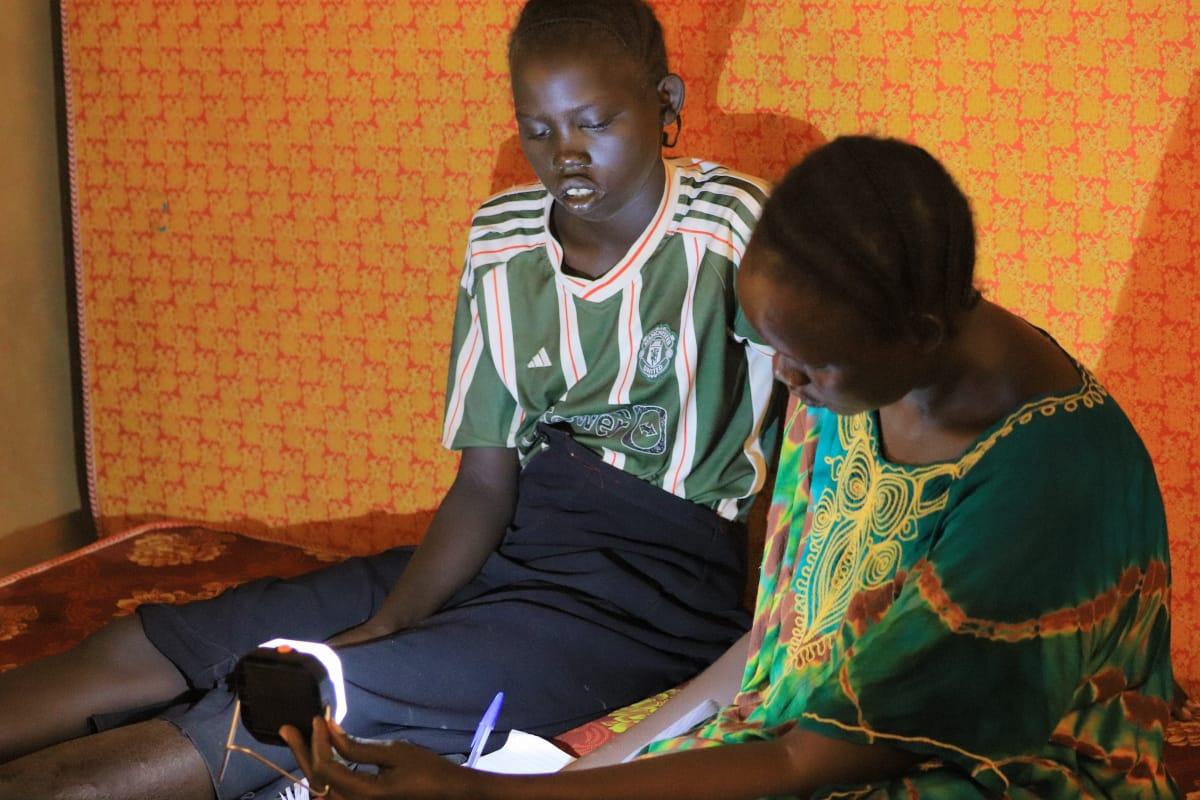
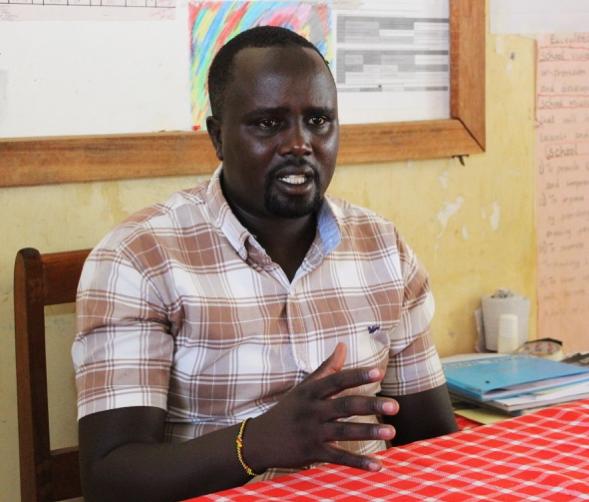
Photo Credits; Nyandeng Akol, 34, supports her daughter Nyakuath, 10, with his CBC homework in their home in Dadaab Refugee Complex, Garissa County, Kenya, February 2026.”)
Daadab, Garissa County
Nyandeng Akol is a 34-year-old mother of four living in the Dadaab Refugee Complex in Garissa County, Kenya. She fled conflict in South Sudan in search of safety and stability for her family. Like many refugee parents, her daily life is shaped by the challenge of meeting basic needs while holding onto one enduring hope to secure a better future for her children through education.
While she deeply values education, supporting her children’s learning was once a source of anxiety and frustration. With limited formal schooling, she struggled to understand the expectations of Kenya’s Competency Based Curriculum (CBC), which places emphasis on active parental involvement, creativity, and practical learning.
“Before, I thought school was only about reading books and passing exams,” she explains. “When my daughter came home with activities, I didn’t know how to help her. I felt like I was failing her.”
Her days were filled with household responsibilities such as fetching water, preparing meals, and caring for her children, leaving little time or confidence to engage meaningfully in their education.
Her turning point came through radio. She began listening to a curriculum focused radio talk show produced by FilmAid Kenya, aired through a local community radio station. The program broke down curriculum concepts into simple, relatable language and demonstrated practical ways parents could support learning at home using everyday materials.
“I remember the presenter saying, ‘You are your child’s first teacher,’” Nyandeng says. “That stayed with me. I realized I didn’t need to be educated to help. I just needed to be involved.”
Through these broadcasts, Nyandeng gained knowledge, confidence, and a renewed sense of purpose. The radio programs helped bridge a critical gap in parental engagement, equipping caregivers with the tools to support learning within their own homes.
Motivated by her new understanding, Nyandeng began engaging more actively with her children. She asked questions about what they were learning, guided simple activities, and encouraged creativity.
“My dream is for my children to have opportunities I never had,” she shares.
Nyandeng’s journey was part of a broader community-based awareness initiative implemented in collaboration with TeachWell consortium partners, education actors, and child protection stakeholders.
Film Aid Kenya, serving as the communication agency, played a central role by producing and broadcasting radio programs that translated curriculum principles into accessible messages.