TeachWell’s research and learning products generate evidence on what works to support teacher professional development and improve learning in complex education environments. These insights inform education systems, policymakers, and partners seeking scalable, cost-effective approaches to strengthening teaching and learning.

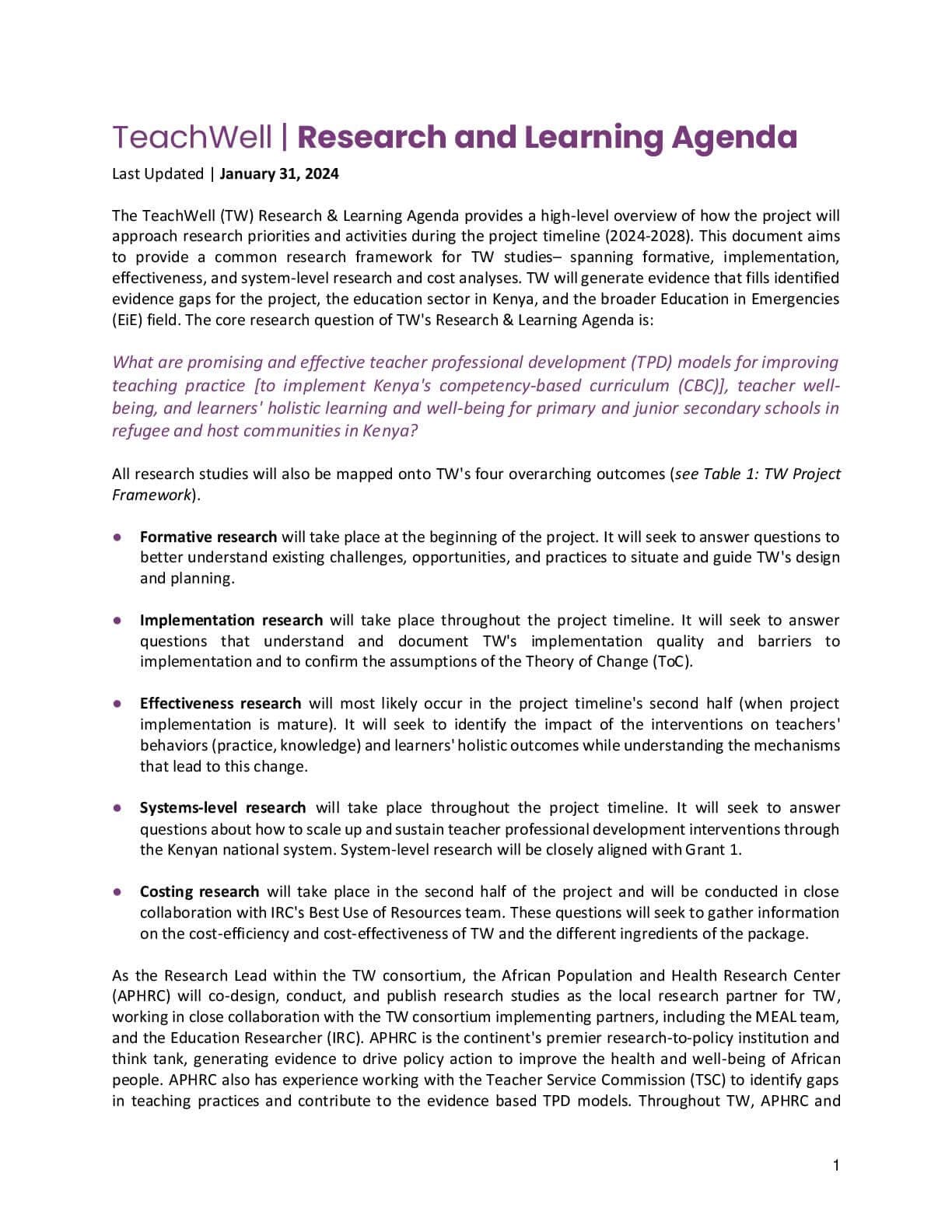
TeachWell Research Learning Agenda
The TeachWell (TW) Research & Learning Agenda provides a high-level overview of how the project will approach research priorities and activities during the project timeline (2024-2028). This document aims to provide a common research framework for TW studies– spanning formative, implementation, effectiveness, and system-level research and cost analyses. TW will generate evidence that fills identified evidence gaps for the project, the education sector in Kenya, and the broader Education in Emergencies (EiE) field.
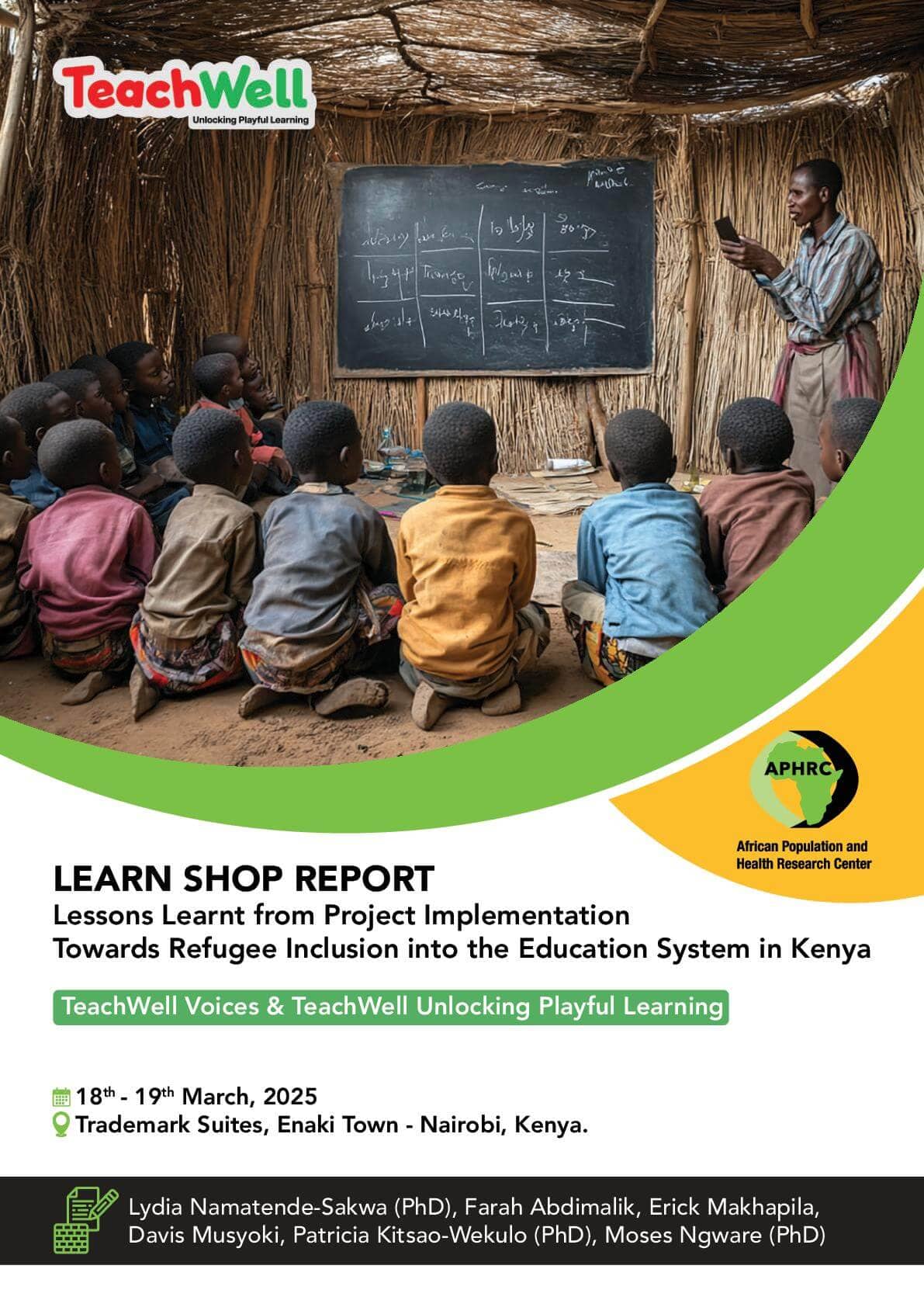
TeachWell Voices TeachWell Learn Shop Report
Teachers are the greatest school-level predictor for student learning, well-being, and holistic development especially in conflict-affected settings with limited resources and familial support (Braun et al., 2020). Schooling can restore a sense of normalcy, providing physical, cognitive, and psychosocial protection, with teachers at the forefront in creating inclusive learning environments (Kirk & Winthrop, 2013; Soylu, 2020). Yet, teachers in humanitarian settings, often refugees themselves (Kirk and Winthrop 2008; Sesnan et al. 2013), must not only learn the curriculum in the host country but also manage overcrowded classrooms, excessive students-teacher ratio (180+), inadequate resources and infrastructure with restricted certified and credentialed teacher professional development (TPD) opportunities (Adelman 2019; Mendenhall et al. 2020). The high teacher turnover has been attributed to myriad factors including low remuneration, heavy workload as well as the magnitude of learners’ academic, linguistic, and psychosocial needs (Falk et al., 2019; Wa-Mbaleka, 2012).
Additionally, these teachers must provide psychosocial support to children with trauma, despite the limited support towards their own emotional well-being (Kirk and Winthrop 2013; Mendenhall et al. 2015). To meet the learning and developmental needs of the children in their care, these teachers require expert support to deliver quality learning, overcome the challenges of their situation, and embrace the rewards and opportunities of their role. This means investing in teachers’ knowledge, skills, and motivation; advocating for improved policies; and healthy and safe environments.
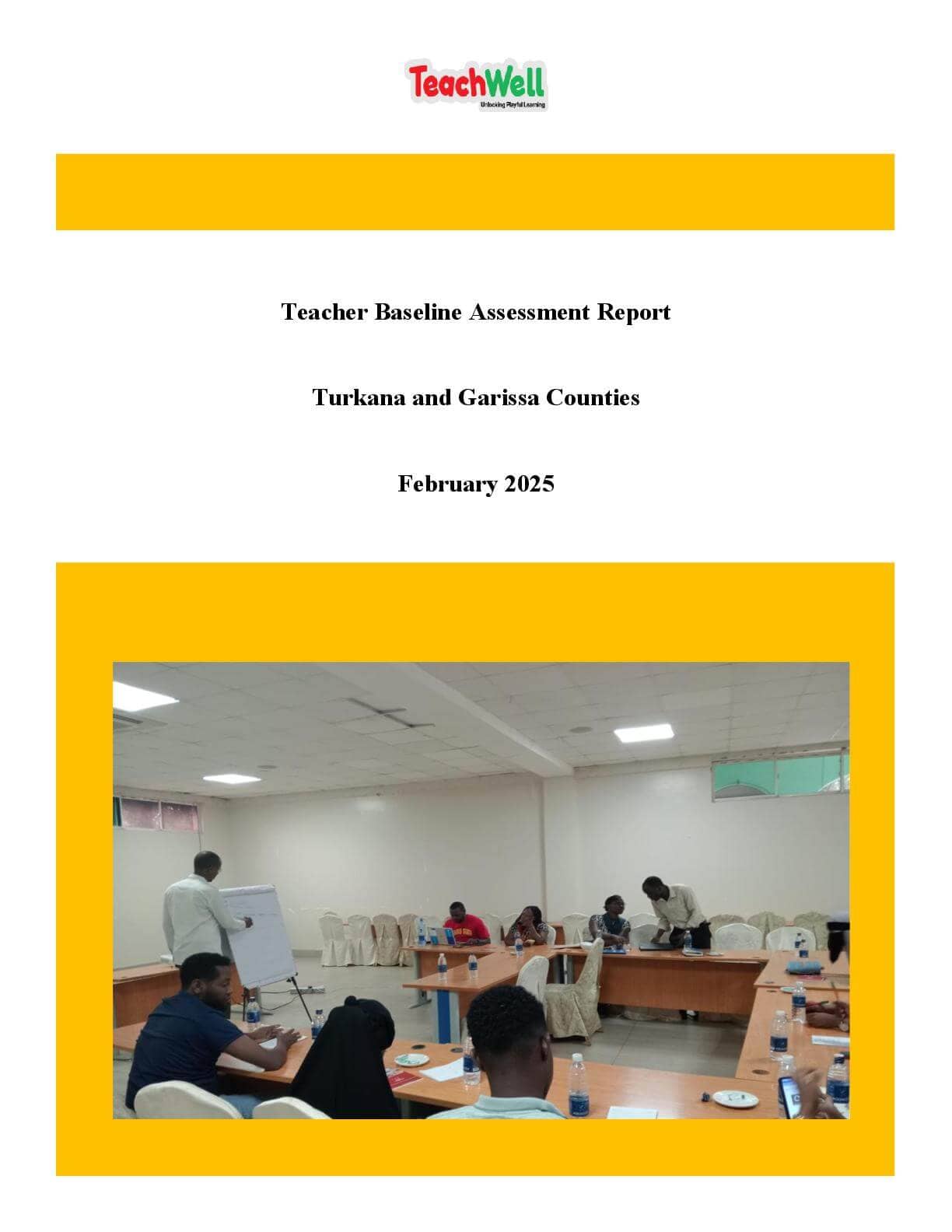
Teachwell Teacher Baseline Assessment Report
The Teachers Baseline Assessment was designed to establish the pre-intervention status of teachers in terms of knowledge, skills, competencies, and resilience, which constitute the primary outcomes that the project seeks to deliver. During the Teachwell project inception phase, Key Performance Indicators (KPIs) were developed to benchmark progress of the project’s implementation. These indicators, aligned to the project’s theory of change and the Teacher Continuous Capacity Development (TCCD) framework, are intended to assess immediate results and track performance throughout the project lifecycle. The Monitoring, Evaluation, Accountability, and Learning (MEAL) plan outlines a structured mechanism for measuring progress at different points, depending on the nature of change anticipated and the integration of new teacher cohorts.
The baseline assessment plays a dual role of both programmatic measurement and research. On one hand, it provides essential data to set indicator targets, many of which require baseline evidence to establish realistic benchmarks. On the other, it embeds a research element from the design stage, incorporating selected questions from the project’s research and learning agenda. This dual approach ensures that data generated is not only useful for routine monitoring but also contributes to evidence building, adaptive programming, and future scaling.
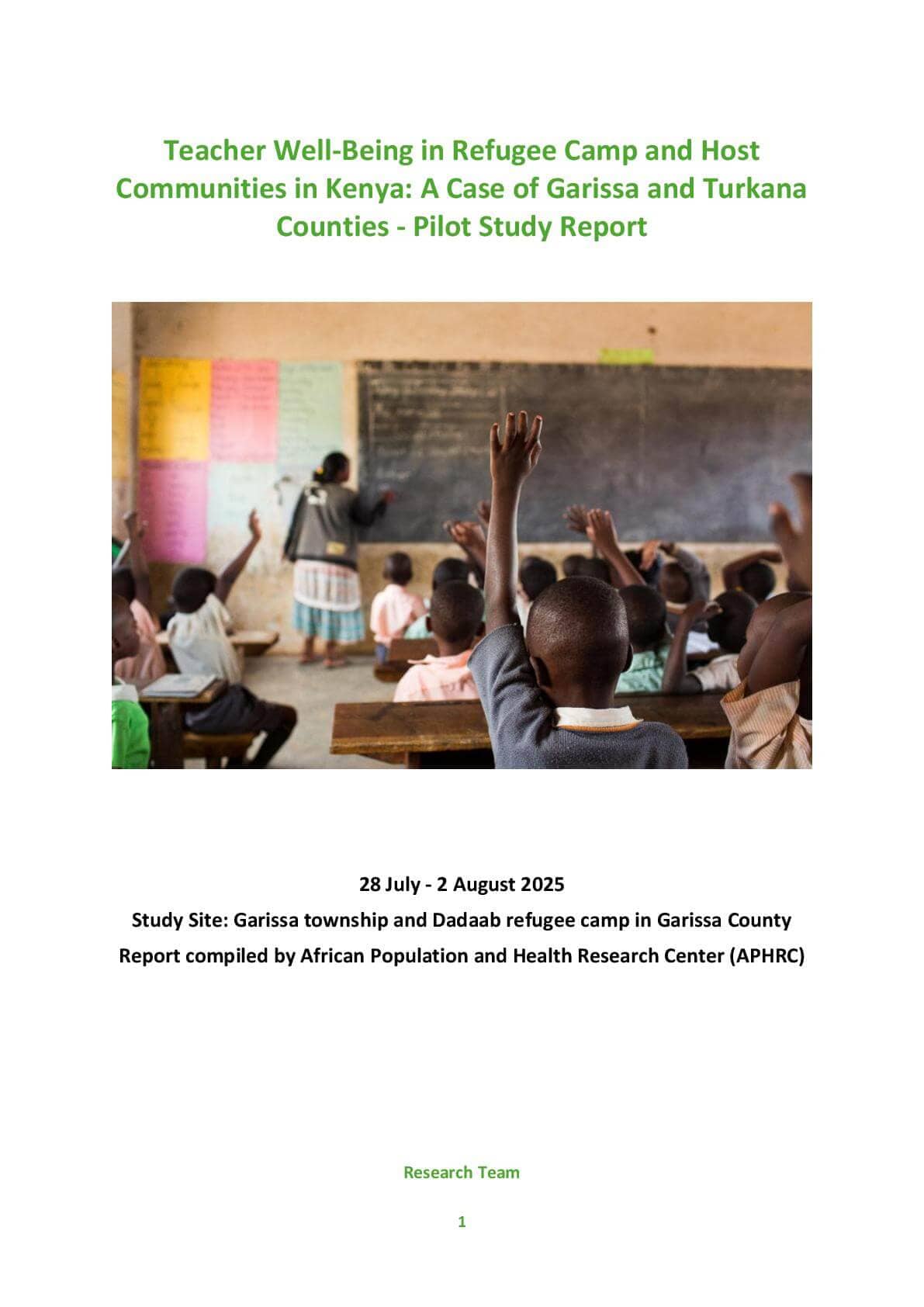
Teacher Well-Being in Refugee Camp and Host Communities in Kenya Pilot Study Report
As part of the Teacher Well-Being Study, the African Population and Health Research Center (APHRC) conducted a pilot in Garissa County, Kenya, to test the functionality, clarity, and feasibility of qualitative and quantitative tools ahead of the main study planned for September 2025. The pilot sought to refine instruments,
ensure cultural sensitivity, and strengthen methodological and ethical rigor in capturing the well-being of teachers in refugee and host community schools.
Six schools in Dadaab refugee camp and its host community were purposively selected. Eighteen teachers, six heads of institutions, county-level policy actors, and gender-segregated teacher groups participated through surveys, key informant interviews, and focus group discussions (FGDs). Locally recruited and trained field assistants played a crucial role in building trust, ensuring linguistic accuracy, and navigating cultural sensitivities.
Teacher-Continuous-Professional-Development-TCCD-Cohort-Two-Pilot-Report
The TeachWell pilot assessed classroom practices across five pedagogical domains—lesson structure, Learning through Play (LtP), Universal Design for Learning (UDL), Social and Emotional Learning (SEL), and learner experience—through lesson observations, teacher surveys, and qualitative feedback in both host and refugee schools.
Findings show strong teacher uptake of UDL, with 93.8% reporting confidence and ease in applying its principles, and high enthusiasm for LtP. However, its classroom use was more limited than teachers’ selfreports suggest. While confidence is high and practices are widespread, there are nuanced differences in the application of UDL's three pillars between host and refugee schools. SEL emerged as the weakest domain: while 75% of teachers found the training understandable, only 56.3% felt confident applying SEL, with uptake particularly low in refugee schools. Learner experience was rated especially positively in refugee classrooms, where lessons were more frequently observed as engaging, joyful, and transformative.