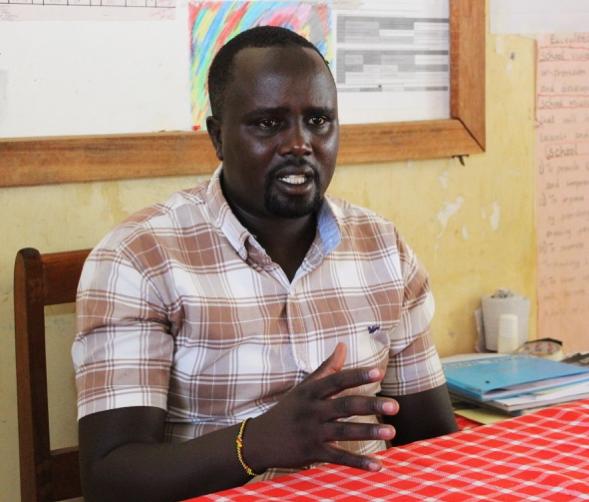
Location: Nalamacha Primary School, Lokichoggio Sub-County, Turkana West
Funding Partner: Grundfos Foundation (TeachWell WASH Component)
Implementation Period: 2023–2026
Nalamacha Primary School sits at the far western edge of Kenya, near the South Sudan border, in one of the country’s most food-insecure and climate-stressed regions. The school serves a highly vulnerable pastoralist community where education competes with daily survival needs. In 2023, during the TeachWell inception phase, a WASH needs assessment revealed severe challenges undermining both learning and well-being.
At the time, the school had no access to water, only two shared sanitation doors for teachers and learners, and a severely degraded school environment due to lack of cleaning tools. Hygiene knowledge among learners was low, and absenteeism was common. School enrolment stood at 87 learners, reflecting both poor learning conditions and household-level barriers to education.
A Strategic WASH Investment
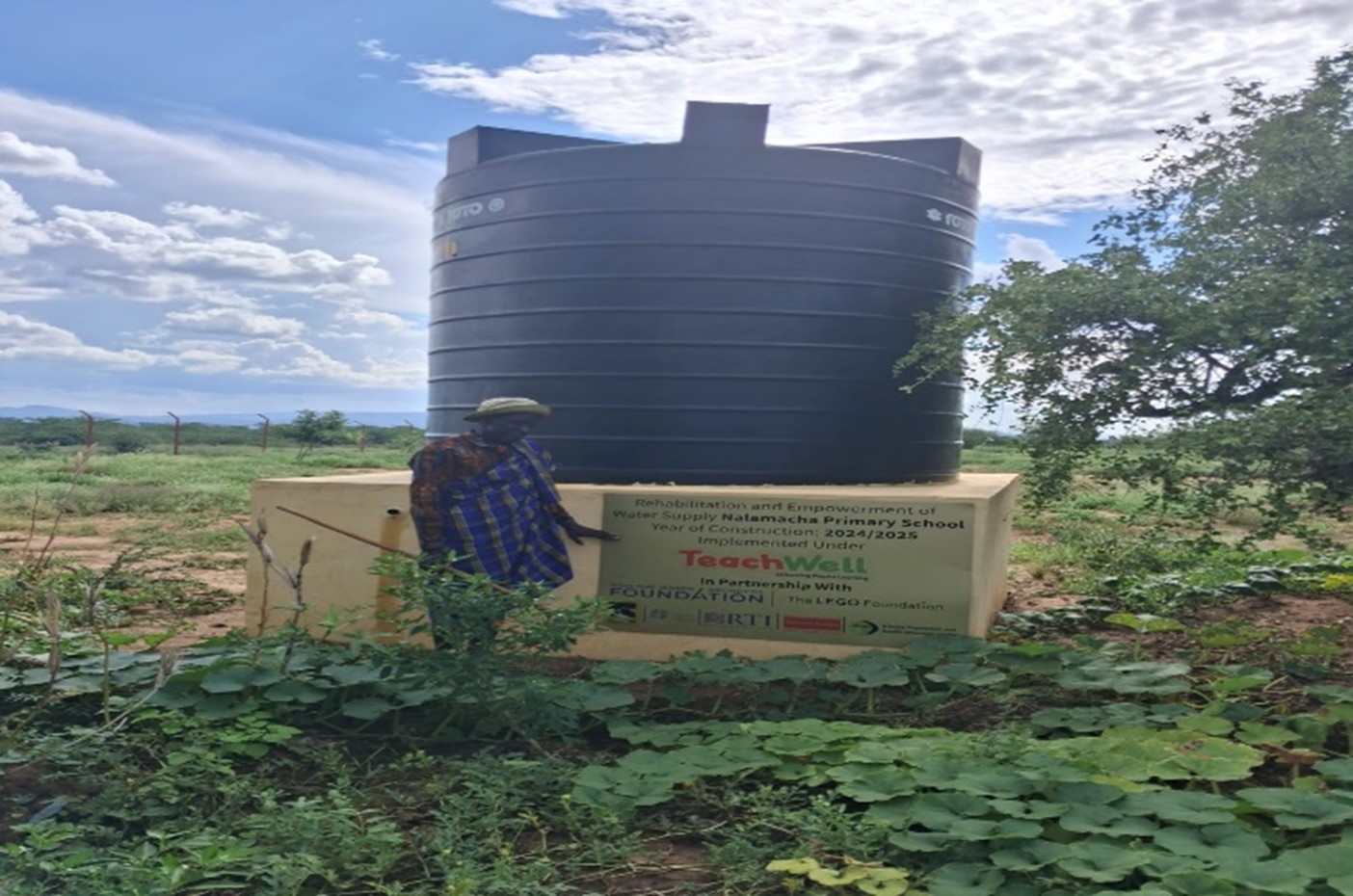
Recognizing the scale and urgency of these gaps, Nalamacha was prioritized for water infrastructure support under the Grundfos-funded WASH component of TeachWell. IRC implemented a gravity-fed water system, piping water from a borehole approximately 3 kilometers away, and installed a 10,000-litre storage tank with multiple water abstraction points strategically positioned across the school compound.
For the first time, Nalamacha had reliable, safe, and sufficient water—meeting daily school demand with surplus capacity.
Unlocking Unintended but Powerful Outcomes
With consistent water availability, the School Board of Management (BoM) and Head Teacher identified an opportunity to address another critical challenge: food insecurity and low enrolment. Leveraging excess water that would otherwise go unused, the school established a small-scale vegetable garden within the compound.
Since inception, the school has completed three harvest cycles. Most of the produce is consumed through school feeding arrangements, directly improving learners’ diets. Surplus vegetables are sold in nearby Lokichoggio town, generating income for the school.
Crucially, this locally generated income has been ring-fenced to support operation and maintenance (O&M) of WASH facilities, strengthening sustainability beyond the project lifecycle.

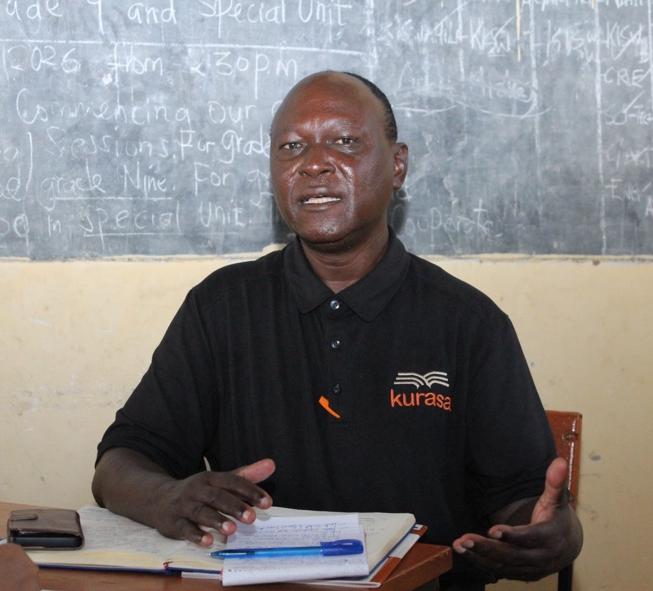
Joint Support Supervision of WASH interventions at Nalamacha Primary School
Tangible Impact on Learners and Enrolment
During this reporting period, the BoM used proceeds from produce sales to purchase school uniforms for 30 learners from the most vulnerable households. The effect was immediate: school enrolment increased from 87 to 102 learners (49 boys and 53 girls), as families were encouraged to send and retain children in school.
In parallel, the provision of environmental cleaning tools and the activation of School Hygiene Clubs (SHCs) transformed the school environment. Learners now lead peer-to-peer hygiene promotion sessions, reinforcing handwashing, sanitation use, and environmental cleanliness. The compound is visibly cleaner, and hygiene practices have become part of daily school culture.
Why This Matters
Nalamacha Primary School demonstrates how strategic WASH investments can catalyze outcomes far beyond infrastructure. Access to water has improved hygiene, strengthened nutrition, increased enrolment, supported school-level income generation, and created a sustainable mechanism for maintaining WASH services.
This story is a clear illustration of the multiplier effect of WASH in schools—and the value of continued investment in integrated, context-responsive solutions that place sustainability and community ownership at the center.